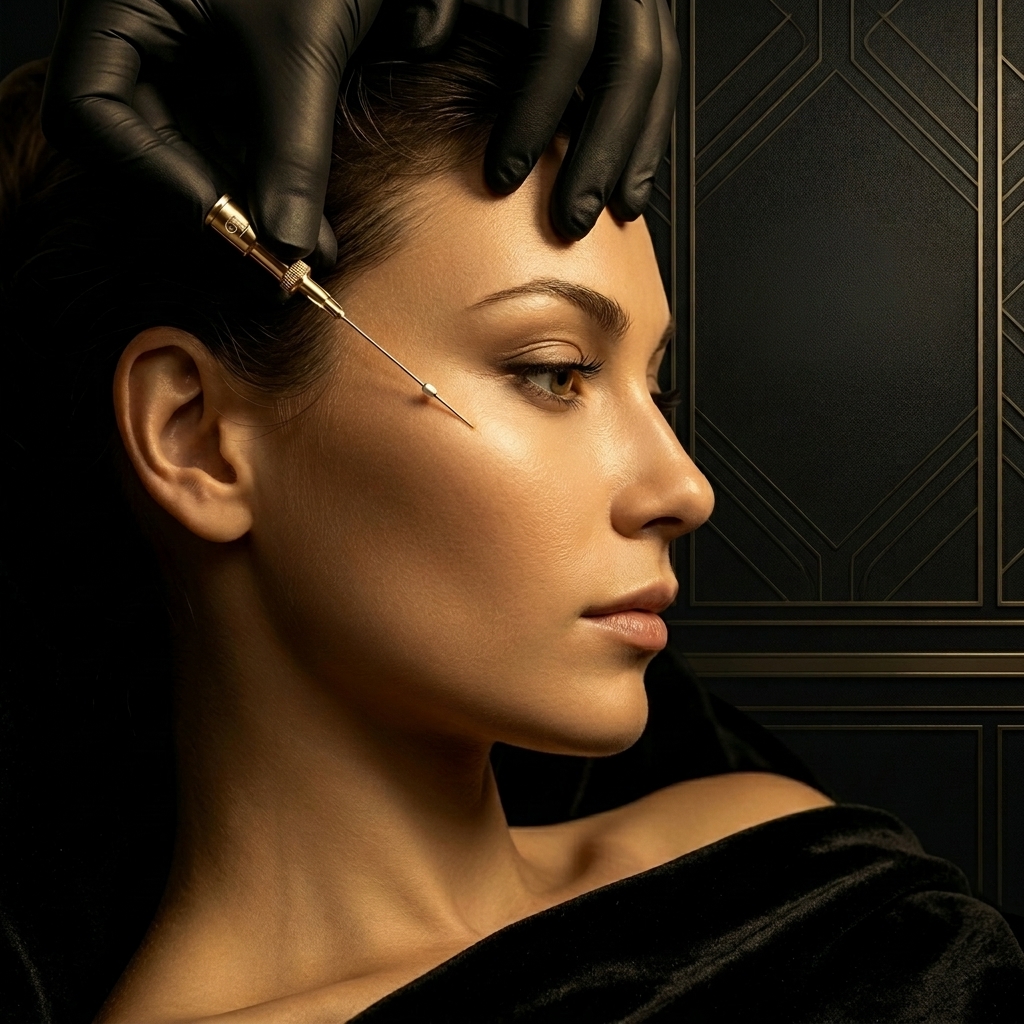
Thread Lift
Aging, pollution, stress, chemically treated cosmetics, and hormonal imbalance - all these factors can cause adverse effects on the skin tissue by making it thin. This happens due to diminished production and breaking down of elastin and collagen. Aging causes the loss of fat cells and muscle mass, and it also reduces bone density, resulting in the formation and appearance of wrinkles, folds, creases, and sagging in the skin.
Nowadays, a number of surgical and non-surgical procedures are available to deal with the various signs of aging, and a thread lift is one of them. A thread lift in Delhi NCR, performed by Dr Sharmistha Bhattacharyya, is a safe, convenient, and minimally invasive medical procedure in which temporary sutures provide a visible lift to the skin. Special threads are used to hold and reposition the skin and facial tissues, thus reducing sagging around areas such as the neck, cheeks, mid-face, forehead, eyebrows, and jawline.
A thread lift is an affordable option and is the best alternative to a full facelift. It provides a safe, effective, and quick solution to a wide range of skin aging problems. Special, implantable surgical threads have barbs on them that grab and provide a lift to the sagging skin. Threads are placed under the skin in various parts of the face and body.
Types of Threads Used in Thread Lift
1. Polydioxanone (PDO)
These are the longest and made up of synthetic biodegradable polymer. These are absorbed in the body and produce more collagen in the targeted area by triggering hydrolysis and fibroblasts. They are further classified as screw, cog, and mono. These threads promote collagen production, and the barbs help to restore volume, provide lift to the face, and improve skin elasticity and texture.
2. Polylactic acid (PLA)
These are made up of a biocompatible polymer which is derived from lactic acid. These threads are resorbable and regenerate collagen for a longer period of time. Cones present in PLA threads are used to hook to the tissues, provide lift to the facial area, and restore the ideal shape.
3. Polycaprolactone (PCA)
These are bio-absorbable, monofilament suspension threads of synthetic origin. They provide a fibrotic reaction, which helps to continue to promote collagen regeneration. This provides skin tightening and prevents sagging even after the threads have been reabsorbed.
4. Barbed Threads
These are usually bi-directional, unidirectional, and cogged threads.
5. Non-Barbed Threads
They are monofilament plain and monofilament screw or spinal threads.
Thread breakdown induces the production of hyaluronic acid and collagen, as the small molecules produced after the breaking of the thread are responsible for their production. Age, treatment area, desired results, and other such factors determine the suitable thread to be used for a particular candidate by Dr Sharmistha Bhattacharyya.
Benefits of a Thread Lift
- Minimally invasive with less recovery time.
- Simple procedure that provides an instant lifted and youthful look.
- Enhances overall facial contours.
- Rejuvenates the skin and makes it appear more firm and rested.
- No scarring.
- No surgical complications.
- Affordable cost.
To enjoy the benefits of the best thread lift in Delhi NCR, visit Dr Sharmistha Bhattacharyya's clinic.
Ideal Candidates for a Thread Lift
The following are suitable candidates for a thread lift in Delhi NCR:
- A person with good skin tone in their 30s–60s is considered an ideal candidate.
- Someone who is experiencing sagging in their face and neck areas.
- Older patients who are not able to undergo a facelift surgery because of medical reasons. A candidate suffering from cardiovascular disease, type II diabetes, or high blood pressure can safely undergo this treatment.
- Those who have realistic expectations with the procedure.
A thread lift is not recommended for individuals having excessive sagging, very aged, damaged, or thick skin, or for smokers.
Procedure for a Thread Lift
The treatment usually takes 1-2 hours. First of all, the target areas are identified, and meticulous pre-planning is involved. A thread lift with Dr Sharmistha Bhattacharyya is carried out as described in the following steps:
- Markings are made on the target area where the thread will be inserted. The skin is disinfected, and local anaesthesia is administered.
- Then a small instrument (a cannula or a thin needle) is used to deliver the thread below the skin. The barbs on these threads will lock in place upon insertion to lift very specific areas.
- The threads are cut at the incision point, and cog ends are submerged underneath the skin to avoid the risk of protrusion.
- Cleaning of the treated area and application of ice to minimize the risk of bruising and edema.
Depending upon the patient’s physiological conditions and lifestyle, the result can last up to one or more years. To achieve better and long-lasting results, periodic treatments are recommended. The best outcome of each procedure depends on appropriate patient selection and determining the suitable technique. To get a lasting and effective thread lift in Delhi NCR, book a consultation with Dr Sharmistha Bhattacharyya.
Results of Thread Lift
- Provides younger, radiant, and firm skin.
- Eliminates fine lines, wrinkles, and sagging skin.
- Short recovery time.
- No visible scarring.
- Immediate results which improve over 1-2 months.
- Improved facial symmetry and contours.
Anesthesia & Admission
Anesthesia: Local anesthesia with or without light sedation.
Inpatient/Outpatient: This is a simple outpatient procedure. The patient can leave immediately after completion.
Side Effects, Risks, and Complications
When performed by a licensed and experienced surgeon like Dr Sharmistha Bhattacharyya, one does not need to worry about safety as the chances of risks and complications are minimised. Minor side effects include muscle weakness, irritation, swelling, bruising, and pain, which usually resolve on their own within a couple of days. The rare risks associated with a thread lift include nerve injuries, scarring, infection, migration of sutures, dimpling of the skin, hair loss, contour irregularities, thread breakage, or granuloma.
Post-Treatment Guidelines
- Take pain medications as prescribed by the surgeon.
- Don’t rub the face vigorously for at least one week after the surgery.
- Sleep straight and try to prop the head up slightly; don’t roll over onto the face while resting or sleeping.
- Consume only soft foods for at least a week after the treatment.
- Do not touch or wash your face for 12-14 hours after the treatment.
- Limit facial movement for about 2-3 days after the treatment.
- Apply ice or cold compress for a few days, about 3-4 times a day.
- Do not apply make-up or creams for 48 hours.
- Take plenty of rest for 2 days.
- Avoid massaging for 3 weeks after the surgery.
- Avoid excess sun exposure.
Recovery
Patients look presentable after 24 to 48 hours. Occasionally, puckering and pleating may persist for several weeks as the threads settle.
BOOK A CONSULTATION